


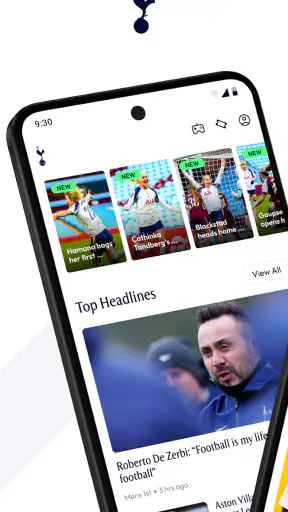
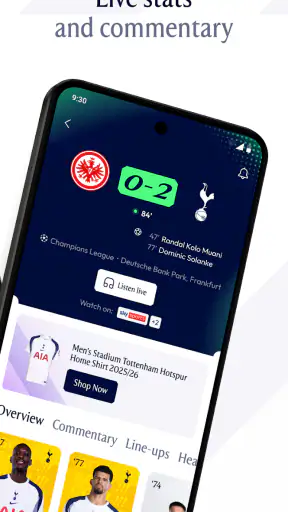
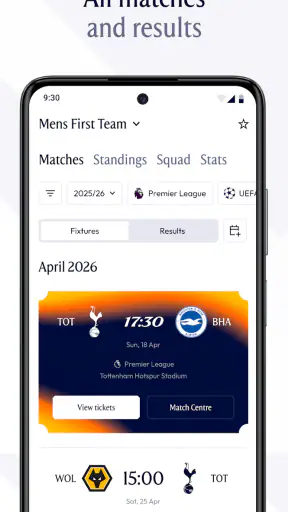
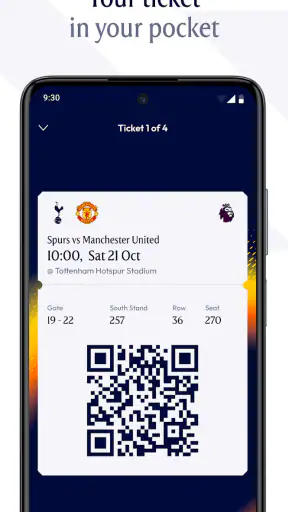
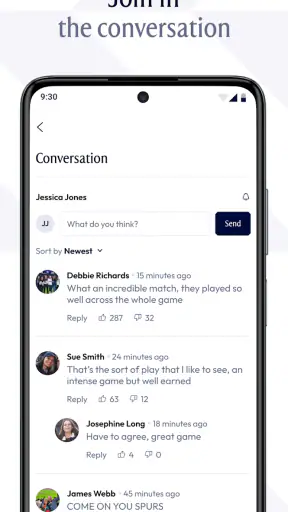
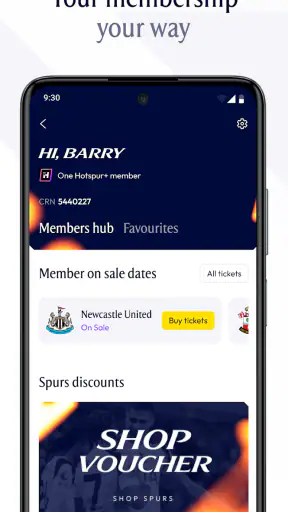
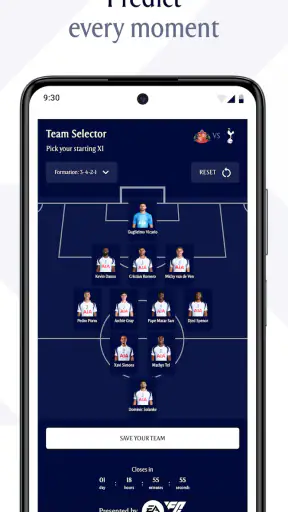
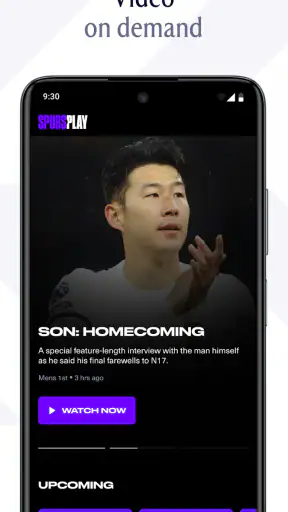
I approached the Official Spurs App as something more demanding than a quick download for matchday excitement. A club app can feel essential during the first week, then quietly become another notification source that I stop opening. My main question was whether Tottenham Hotspur has built something with enough recurring value to earn a permanent place on a supporter’s phone, rather than relying only on the buzz around the next fixture.
My overall impression is positive, with an important qualification: this is most useful when you want a direct Spurs-focused experience. It is a free sports app from Tottenham Hotspur, rated for Everyone, and it has reached more than a million installs. Those details make it easy to try without much commitment, but they do not automatically make it the best football app for every supporter. Its real strength is focus. Its main weakness is that focus can feel narrow if you already use broader sports services for scores, news and analysis.
From first-week excitement to a useful Spurs routine
The first few days are naturally the strongest part of the experience. Opening an official club app creates a different feeling from checking a general football platform: the content is centered on one team, and that reduces the effort involved in finding Spurs-related information. Instead of filtering through several leagues or clubs, I can treat the app as a dedicated doorway into Tottenham’s world.
That directness is what the short store summary, “Your key to Spurs,” gets right without telling the whole story. The app is not simply useful because it carries the club’s name. It is useful because a supporter often wants a single place to begin. When I am thinking about Tottenham, I do not want to search broadly and then separate relevant items from everything else. A club-specific app makes that first step quicker and more intentional.
The first-week appeal also comes from the sense of continuity. A general sports app usually treats a club as one item among many. The Official Spurs App feels designed around the idea that Tottenham is the subject, not merely a result in a larger scoreboard. That distinction matters most to supporters who follow the club beyond the final score and want their everyday sports habit to stay connected to Spurs.
Still, I would not install it expecting an entirely new way to follow football. It is not a replacement for every service on my phone. A broad score app can be more convenient when I am tracking several competitions, and a specialist news source may offer more depth for tactical discussion or wider football coverage. The official app earns its place through relevance and identity, not by trying to cover the entire sport.
What makes the opening experience worthwhile
The most practical way to judge the app is to give it a job. For me, that job is “check Spurs first,” not “manage all my football information.” Once I use that rule, the app becomes easier to appreciate. I can open it when I want club-centered updates, browse with a clear purpose, and leave without getting distracted by unrelated teams.
A realistic everyday scenario is a busy workday when I have only a minute before commuting. I do not have time to browse several football sites, compare headlines or search for Tottenham manually. A dedicated club app gives me a focused starting point. If there is something important to catch up on, I can do that there; if not, I can close it quickly. That low-friction habit is more valuable to me than an app that offers a huge amount of information but makes me work to find the part I care about.
Another useful approach is to separate “official connection” from “independent analysis.” I use the Spurs app for the club’s own perspective and for a feeling of staying close to Tottenham. I would still turn to wider football coverage when I want comparisons, criticism or context across the league. Treating the app as one part of a routine prevents disappointment and avoids asking it to perform a job it was not designed to own.
The app has a 4.4 average from around 7,600 ratings, which suggests that many supporters find the overall experience worthwhile. I would read that as encouragement rather than a guarantee. Club apps are especially dependent on personal expectations: a committed Spurs supporter may value the focused environment immediately, while a casual follower may find a general sports app sufficient.
The details that matter after the novelty fades
After the first burst of curiosity, the question changes from “What is here?” to “Why should I return?” That is where a club app needs a repeatable purpose. The Official Spurs App benefits from being tied to a team with a strong identity, but identity alone does not create a habit. I need a reason to open it on an ordinary day, not only when a major fixture is approaching.
My advice is to make the app part of a specific routine rather than leaving it to compete with every other notification. For example, I might check it once during a lunch break or before a match, then use other services for live scores across the rest of the football world. This keeps the app useful without allowing it to become a constant interruption.
That is one of the less obvious trade-offs with official sports apps: a narrower information stream can be both their best feature and their biggest limitation. The narrower it is, the easier it is to stay focused on Spurs. At the same time, the less likely it is to satisfy someone who wants a complete football dashboard. I prefer the focused approach, but only when I remember that the app is a club companion rather than a universal sports center.
For a supporter who follows Tottenham closely, recurring value can come from the comfort of having a familiar destination. I do not need to decide which source to trust for every small update or remember where I last found club information. That convenience is modest, but it compounds over time. The app does not have to surprise me every visit; it has to remain relevant enough that opening it still feels sensible.
How I would use it alongside other football apps
I would not delete every other football app after installing this one. Instead, I would give each service a clear role. The Official Spurs App would handle the Spurs-specific part of my routine. A general score service would remain better for checking several matches at once, while broader football media would be more suitable for league-wide debate and independent reporting.
This division of labor avoids duplicated effort. If I use multiple apps for exactly the same purpose, I quickly lose patience and stop opening some of them. The Spurs app makes more sense when it is the place I visit for Tottenham, not another copy of a general scoreboard. That is a concrete way to protect its long-term value after the initial novelty has gone.
It also helps to ask what kind of supporter you are. If Tottenham is the club you follow most intensely, the app’s specialization is an advantage. If you mainly watch occasional matches and want one tool for every team, a broader football app may be more efficient. If your priority is detailed statistical analysis, you may prefer a specialist service built around numbers and comparison. The right choice depends less on how much football you watch than on whether Spurs deserves its own daily space.
Month-to-month value, upkeep and the points that cause fatigue
Why it can remain useful over several months
Long-term value in a club app is built from repetition. I look for whether it still saves time, keeps my attention on the team I care about and gives me a reason to return between major events. The Official Spurs App has a natural advantage here because Tottenham’s schedule and news cycle create recurring moments of interest. The app does not need to invent a new purpose every week; it needs to make the existing supporter relationship easier to maintain.
That makes it particularly suitable for people who want a steady connection rather than a one-off match companion. I can imagine keeping it installed through a full season because it remains tied to the club’s changing rhythm. The value is not necessarily in spending a long time inside the app. In fact, I think short, purposeful visits are a sign that it is doing its job well.
One useful habit is to open it when I have a defined question: what is happening around Spurs, what should I catch up on, or where can I begin before a match? This prevents aimless scrolling. It also makes it easier to notice whether the app is still adding something to my routine. If I repeatedly open it and immediately leave because another service answers my question better, that is a sign that I should reduce its role rather than keep it out of loyalty.
The app’s free price removes the biggest barrier to that experiment. I can try it, compare it with my current football routine and decide whether it deserves continued storage space. Since it is aimed at Everyone, it is also approachable for households where different generations follow the club, although the usefulness will still depend on each person’s preferred level of football detail.
The maintenance burden is small, but not invisible
Every app asks for a little maintenance, even when it costs nothing. I have to keep it updated, decide whether its alerts are useful and occasionally reconsider whether it is duplicating another service. The current version is 16.4.0, and the app supports Android 7.0 or later, so compatibility is reasonably broad for Android users with older devices. That makes trying it less complicated than installing something that demands a recent phone.
Updates are a mixed blessing in this category. They can keep a club app aligned with changing seasons and improve reliability, but they can also make the interface feel unfamiliar or alter the rhythm of how I find information. My practical advice is not to judge the app from one visit immediately after an update. I would use it through several normal check-ins before deciding whether the changes genuinely improve the routine.
Notifications deserve special attention. A supporter may want important Spurs news but not every prompt that competes with work, family time or other match alerts. I prefer a selective approach: keep alerts that help me avoid missing something meaningful, and silence anything that turns enthusiasm into noise. This is not a criticism unique to Tottenham’s app; it is the central maintenance task for any club-focused service.
Storage and attention are also forms of maintenance. An app can be free financially while still costing time. If I already have a news reader, a live-score tool and several social feeds, adding an official app may make the overall routine more fragmented. The best reason to keep this one is not that it exists, but that it replaces some searching or gives me a more satisfying Spurs-centered check-in.
Where fatigue can begin
The first source of fatigue is repetition. Club apps naturally revolve around the same team, so a supporter who wants constant variety may eventually feel that the experience is too narrow. That is not a flaw for someone deeply invested in Spurs, but it is a real limitation for casual users. If I want news from many clubs or a quick overview of an entire competition, I would reach for a broader alternative.
The second source is notification overload. Even a well-intentioned stream of updates can make the app feel demanding rather than helpful. I would rather open the app because I choose to than feel pushed back into it by frequent prompts. The solution is simple but important: treat notifications as settings to tune, not as a measure of how engaged a supporter should be.
A third issue is the difference between official access and independent perspective. The club’s own environment can feel more direct and coherent, but I do not expect it to replace critical reporting or neutral analysis. When I want to understand a wider football story, compare opinions or see how Tottenham fits into a broader conversation, another source is usually better. Keeping that distinction clear helps me enjoy the app without expecting it to be everything.
There is also a psychological fatigue that affects nearly every team app: the pressure to check constantly. I do not think a good supporter routine requires permanent attention. The app is more sustainable when it supports my interest instead of defining it. Checking at sensible moments gives the experience a longer life than opening it compulsively and burning out on the same stream of updates.
Who should install it, and who should skip it
I would recommend the app to a Spurs supporter who wants a dedicated official starting point and is comfortable using it alongside broader football tools. It is especially suitable for someone who dislikes searching across unrelated sports content and prefers a club-first experience. The fact that it is free makes the decision easy: install it, test it during an ordinary week and see whether it genuinely shortens the path to the information you want.
I would be more cautious if Tottenham is only one of many teams you follow. In that case, a general sports app may give you more value from one installation. I would also skip it if my main requirement were deep statistical research, extensive cross-league coverage or independent tactical debate. The official Spurs App may complement those needs, but I would not choose it as the only football tool.
Families and younger supporters may appreciate the Everyone age rating, while older Android users benefit from the minimum operating-system requirement of 7.0. Those points make the app accessible, but accessibility should not be confused with universal usefulness. The deciding factor remains the strength of the reader’s connection to Spurs.
My long-term verdict
After the first-week excitement, I think the Official Spurs App earns lasting space when I use it deliberately. Its strongest quality is not that it tries to dominate every part of football coverage. It gives Tottenham a dedicated place on my phone, and that focus can make everyday following feel simpler and more personal.
Its long-term weakness is equally clear: the same focus can feel restrictive, especially for supporters who want one app to cover every team, competition and style of analysis. I would not keep it merely because it is official. I would keep it if its club-centered perspective saves me time, improves my matchday routine or gives me a more natural way to stay connected between fixtures.
Tottenham Hotspur is the developer, and the app has been available since April 2, 2019, giving it a more established presence than a brand-new experiment. That history does not guarantee a perfect experience, but it supports the idea that this is intended as an ongoing part of the club’s digital relationship with supporters rather than a temporary promotional download.
My final recommendation is straightforward: Spurs supporters should try it, but they should give it a defined role. Use it as the official home for Tottenham-related checking, control the alerts and keep a broader service for football outside the club. With that setup, the app has a realistic chance of surviving the novelty phase. It earns permanent space when it becomes a calm, useful habit—not another feed demanding constant attention.


